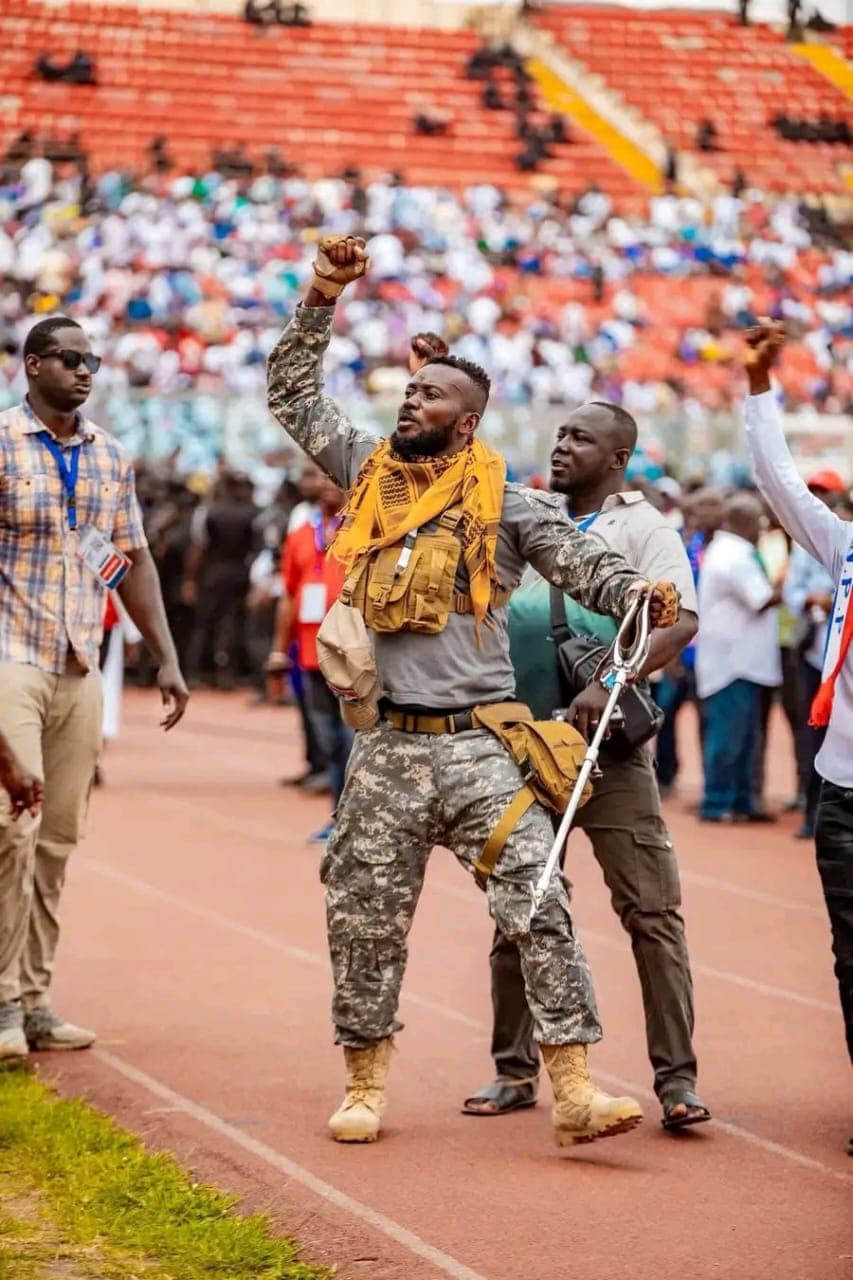
Something profound shifted on the floor of the Baba Yara Sports Stadium this weekend. When the Electoral Commission finally called the Vice Chairmanship race, the result did not just shock the political establishment.
It completely dismantled the traditional playbook for winning internal party elections in Ghana. The New Patriotic Party has long cultivated an image built on aristocratic statesmanship and white-collar professionalism. For decades, ascending to the highest ranks of its national executive committee required a specific pedigree defined by advanced degrees, corporate boardrooms, or established parliamentary tenure. The election of Kojo Fosu Boadu shattered that tradition completely.
Universally known as Kojo Bamba, the newly elected 1st National Vice Chairman presents a stark contrast to the traditional party elite. He is a former auto mechanic who rose through the gritty and often controversial ranks of grassroots mobilization. Bamba previously gained national attention as a security operative associated with the Delta Force group. That period included a high-profile arrest and a court reprimand for lawlessness. Following that legal intervention, he retreated from the public spotlight to work quietly within the party security detail. His background lacks the polished corporate gloss that the NPP typically expects from its highest officers.
Yet the Electoral Commission announced his victory with 3,116 votes. He outmaneuvered deeply entrenched political veterans, pushing immediate past National Organiser Henry Nana Boakye and former Communications Director Nana Akomea into the second and third vice-chair slots. Understanding how a historically elitist party handed immense executive power to a former grassroots enforcer requires looking closely at his campaign messaging. Bamba completely ignored the high-level rhetoric of his opponents. He built his platform strictly around grassroots empowerment and the direct welfare of regional and constituency executives.
He promised to remain embedded at the local level to correct past mistakes and improve the living conditions of the ordinary members who do the heavy lifting during election cycles. Furthermore, he actively evolved his public persona in the lead-up to the congress. He spent the final days of the campaign advocating strongly for peaceful elections and urging supporters to uphold the credibility of the democratic process.
The delegates rewarded him because he reflects their daily reality. The thousands of voters on the stadium floor clearly felt a massive disconnect from the executive boardrooms in Accra. They ignored the marching orders from their regional chairmen and voted their own localized conscience instead. By electing a man who has literally guarded the party gates, the grassroots sent a definitive message to the establishment. They are no longer interested in being managed from above.